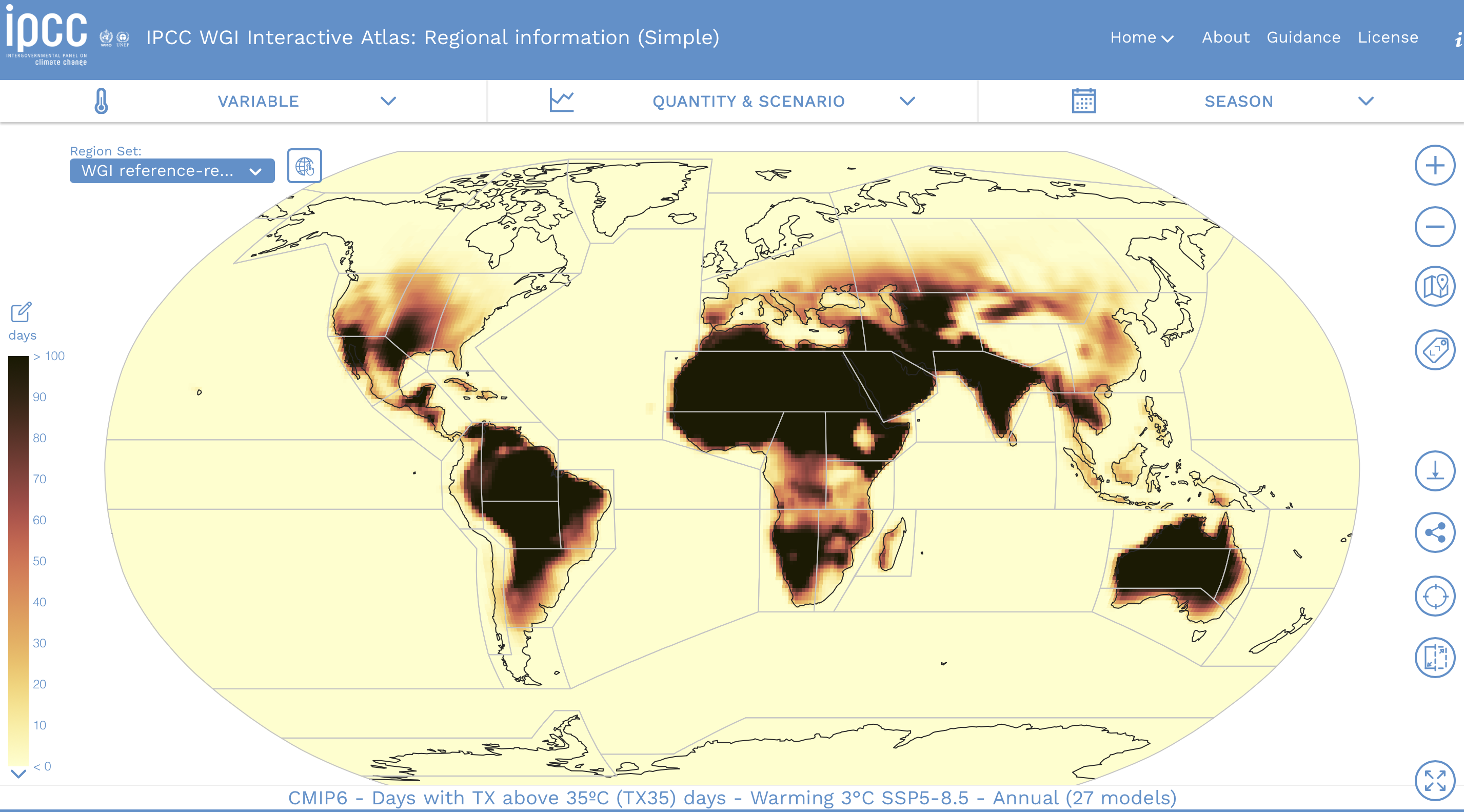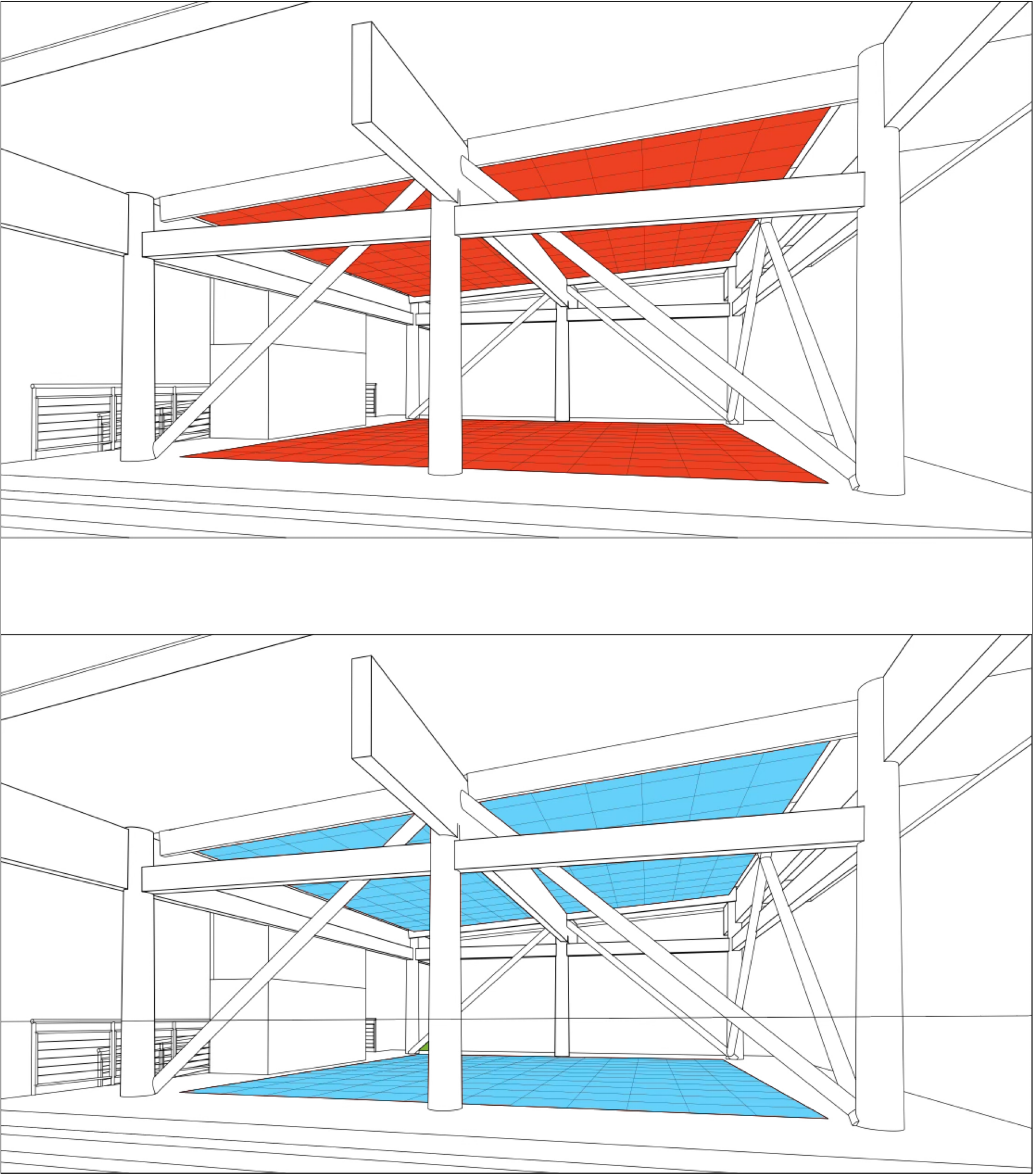
Radiant Exchange's mission is to deliver resilient infrastructure that provides thermal comfort and protects health under conditions of extreme climate. Conditioning outdoor space is inherently more difficult than conditioning the interior of a building, so we use an integrated, multi-modal approach to exterior thermal comfort.
Indoors, comfort is typically achieved by heating or cooling air within an enclosed volume. Outdoors, however, blowing tempered air at occupants is much less effective due to dilution, wind, and lack of containment. In cold weather, the most effective method of warming people outdoors is radiant heat. The experience is familiar: the warmth of the sun on a cold day, a fire, or a radiant heater on a winter evening. In each case, heat is transferred directly to the body by radiation rather than by warming the surrounding air.
In extreme heat, outdoor cooling is more challenging. Conventional outdoor cooling strategies (shade, increased air movement, and evaporation) lose effectiveness as ambient conditions approach human physiological limits (approximately 35°C / 95°F wet-bulb temperature). Under these conditions, the most reliable way to remove heat from the body is through radiant exchange, in which cool surfaces absorb heat directly from occupants, largely independent of air temperature or humidity.
Our systems integrate radiant-barrier shading, controllable air movement, evaporative processes, and both passive and active radiant cooling technologies. These range from nature-based strategies such as vegetative shading and evapotranspiration to heat-pump-driven radiant panels. Each project is engineered for the specific climate, site constraints, and use case to maximize performance.
We are equally committed to minimizing environmental impact. Whenever feasible, our projects operate on-site using solar energy and harvested rainwater, reducing operational carbon emissions and resource demand.
Cooling Strategies
All these techniques should be used where appropriate, and most effective outdoor cooling solutions will be a combination of them.
Shading (roofs, tents, vegetation, PVs): Reduces solar gain and surface temperatures, but does not address high ambient heat.
Induced air movement (wind catchers, thermal chimneys): Enhances convective cooling when temperature differentials exist, with limited reliability.
Mechanical air movement (fans): Increases heat loss from the body but is constrained by air temperature and humidity.
Evaporative cooling (misters, water based cooling towers): Effective in dry climates; loses efficacy as humidity and wet-bulb temperatures rise.
Radiant cooling and heating: Exchanges heat directly with the body, operates independently of air temperature and remains effective under extreme conditions.